Photo: Taylor Cunningham · @taylork.sea
About
I'm an underwater cinematographer living in Kona, Hawaiʻi, where I spend most of my days offshore filming wildlife.
At a glance
Rescue Diver · 500+ dives
FII Level 1 Freediving Instructor · Advanced Freediving Safety · 30 m+ working depth
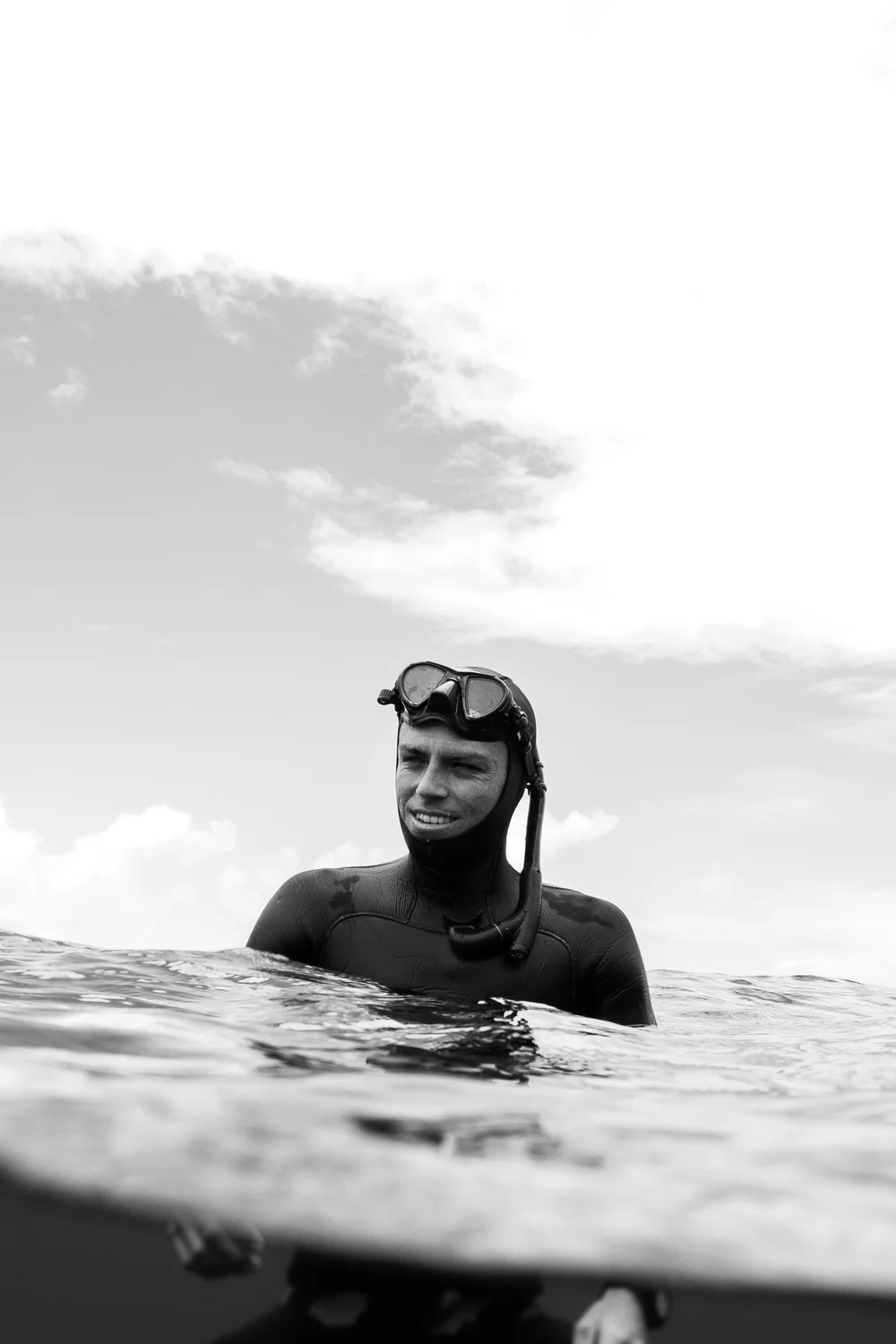
I spent my early years on boats. My family lived aboard for a few years when I was a kid, including eight months sailing up and down the coast of Mexico. Between that and growing up surfing, fishing and sailing in Southern California, the ocean was a big part of my life from early on.
Racing outrigger canoes kept bringing me to Hawaiʻi, and the fall after I graduated high school I came over for a race and didn't leave. On Oʻahu's North Shore I found spearfishing, and it took over my life. It laid the foundation for how I watch the ocean: moving slowly and quietly, reading an animal's body language before it moves, and working with current and light. Freediving came next. I moved to the Big Island, spent several years teaching freediving, trained through all three FII levels with Martin Stepanek, and have completed dives past 70 m on bifins. Freediving built on that. It taught me to move efficiently and fluidly in the water, and gave me a level of comfort and composure that I rely on most when a situation is delicate.
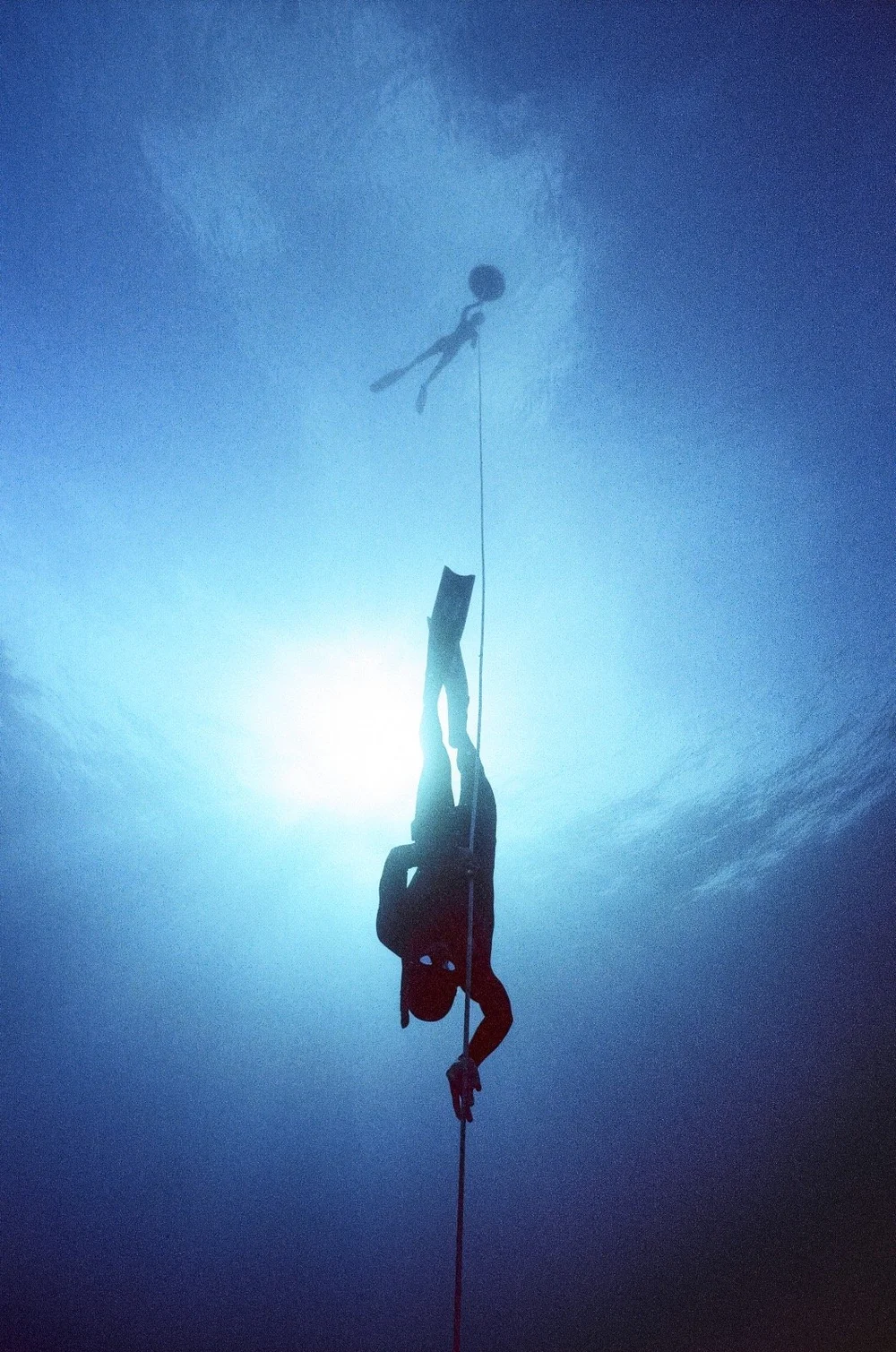
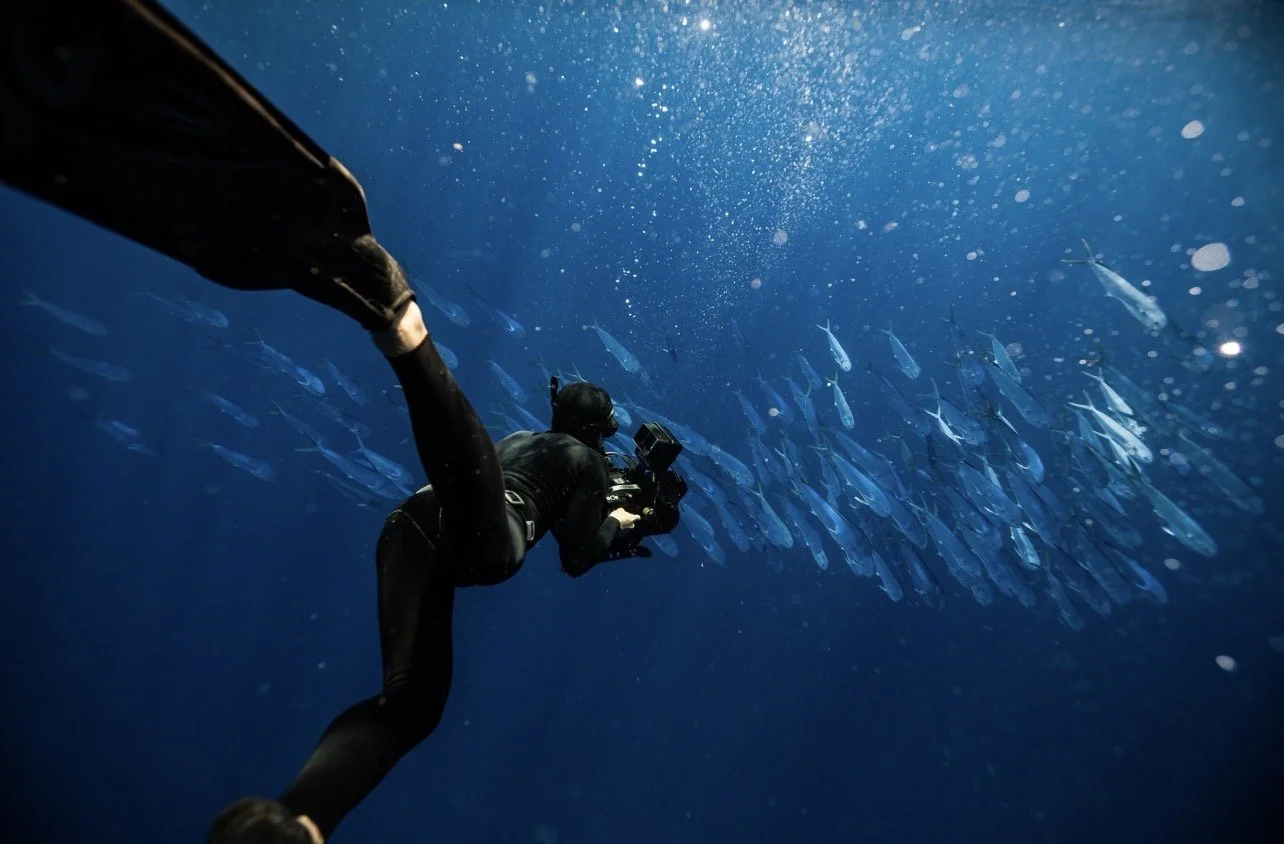
In Kona, spearfishing took me further and further offshore, and the blue water became my favorite place in the world. Somewhere along the way I picked up a camera, and it came with me. The more time I spent out there, the more I started looking around, and I noticed far more than fish: everything else living in the open ocean too. Over time I found myself watching instead of hunting.
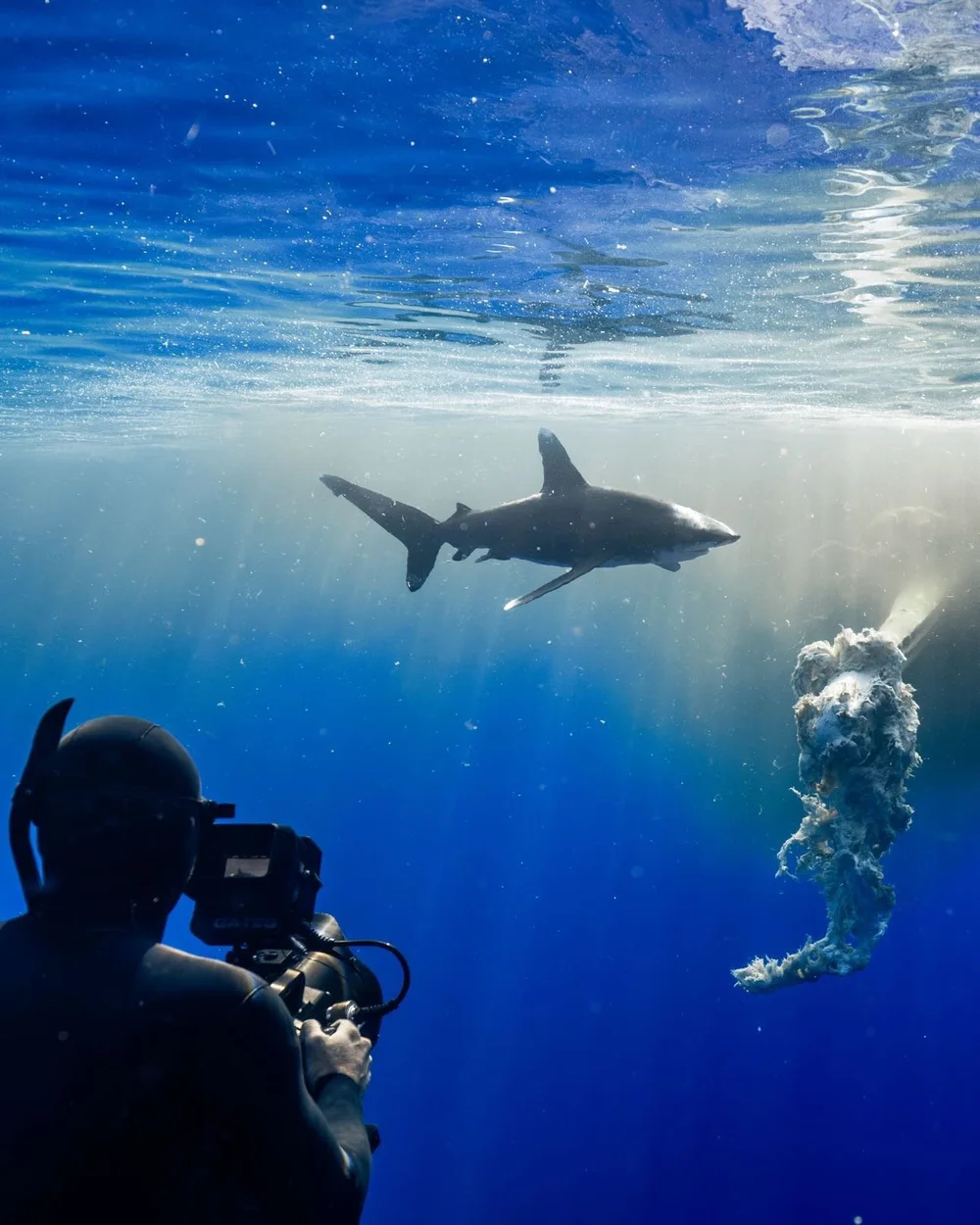
I started working with a company running in-water wildlife encounters, searching Kona's offshore waters for whatever showed up and getting guests safely in the water with it. A lot of that was oceanic whitetips, curious and persistent sharks that need a watchful eye, and guiding people around them taught me to pay close attention to behaviour. Just as important, it taught me patience: how to observe animals, especially marine mammals, without disturbing them, and when the right call is to stay out of the water and let them be.
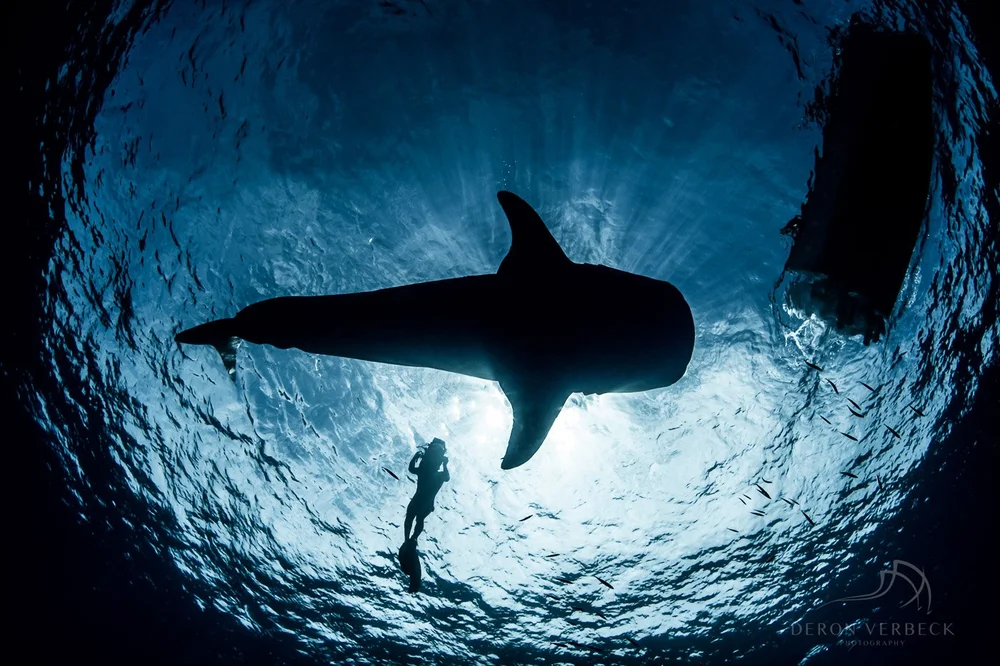
Then the science pulled me in. The more I saw offshore, the more questions I had, and that curiosity had me looking for any chance to work alongside the people trying to answer them. Over the years I've helped tag oceanic whitetip, silky, scalloped hammerhead and whale sharks, and attached biologging cameras to oceanic whitetips and tiger sharks. I've also supported shark and mobula ray fieldwork in the Azores and run boat and camera support for marine mammal research, including fast-response days tagging false killer whales and killer whales off Kona. Some nights I'm towing nets for plankton smaller than a grain of rice, and other days we're searching offshore for rare, deep-diving oddities like goose-beaked whales to observe and tag. A few of those working relationships go back years.
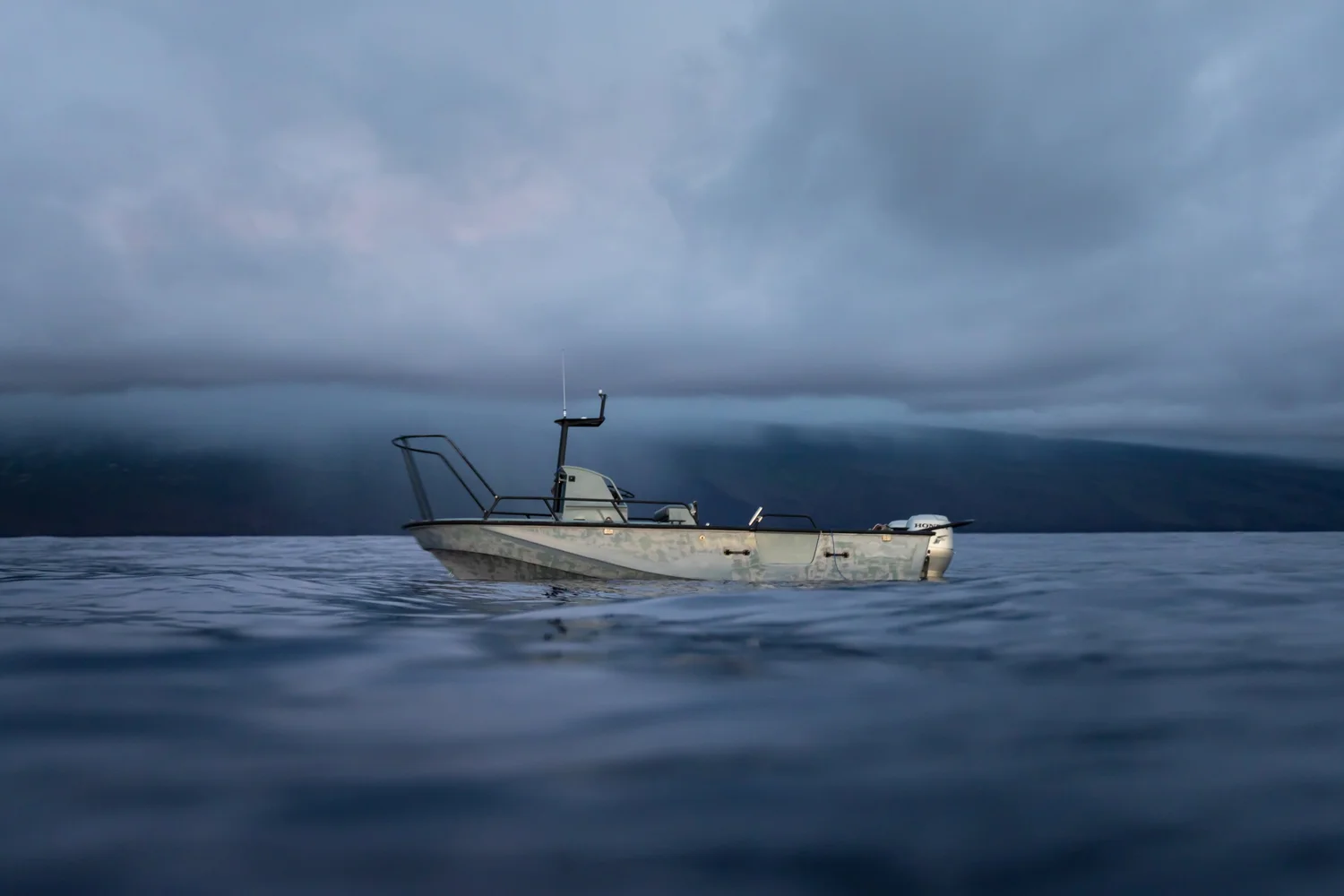
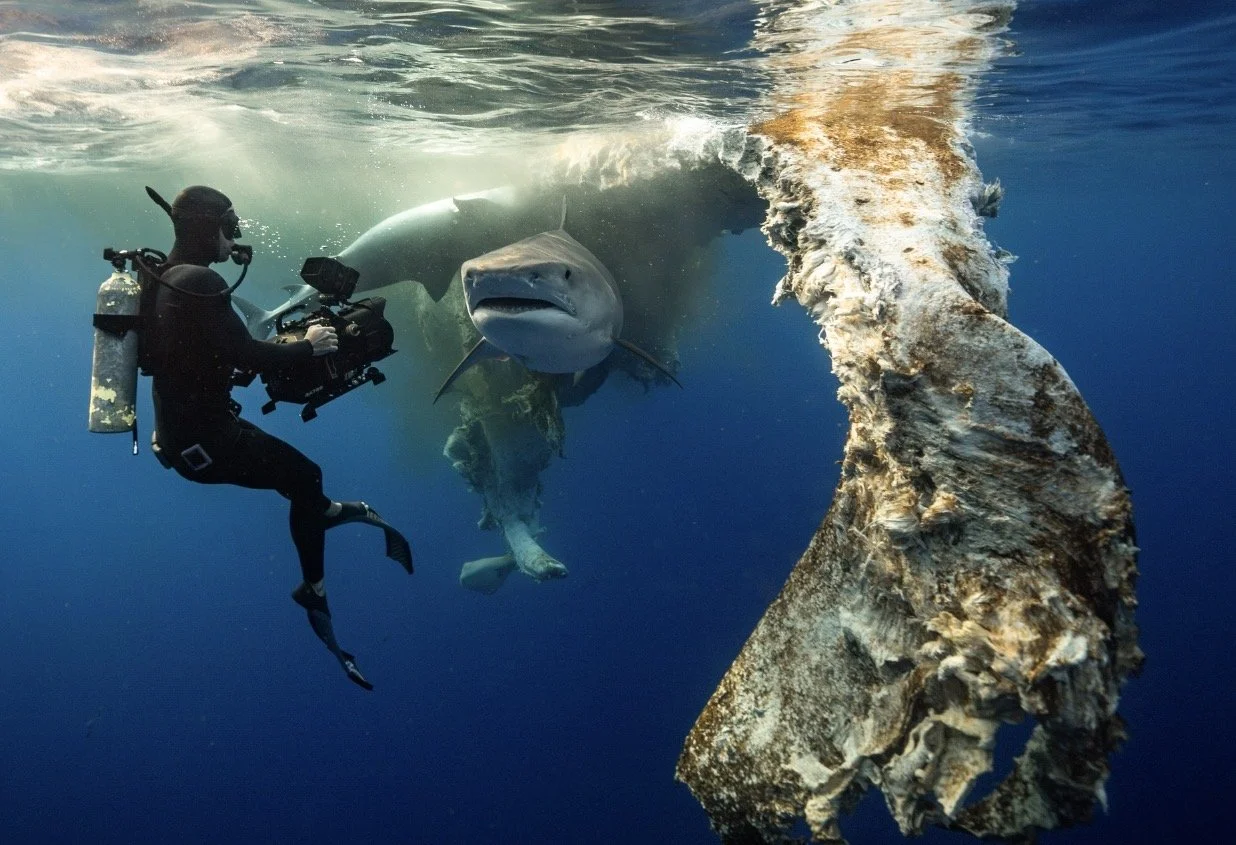
Getting my own boat changed everything. She's a 22 ft Whaler Guardian that originally served with the U.S. Navy Marine Mammal Program, and she still has the dive door and custom features they added for working with the animals. Being able to get on the water within the hour, along with a wide network of people out on the water who let me know when something turns up, has led to some remarkable encounters, like tiger sharks and oceanic whitetips feeding on a sperm whale carcass miles offshore.
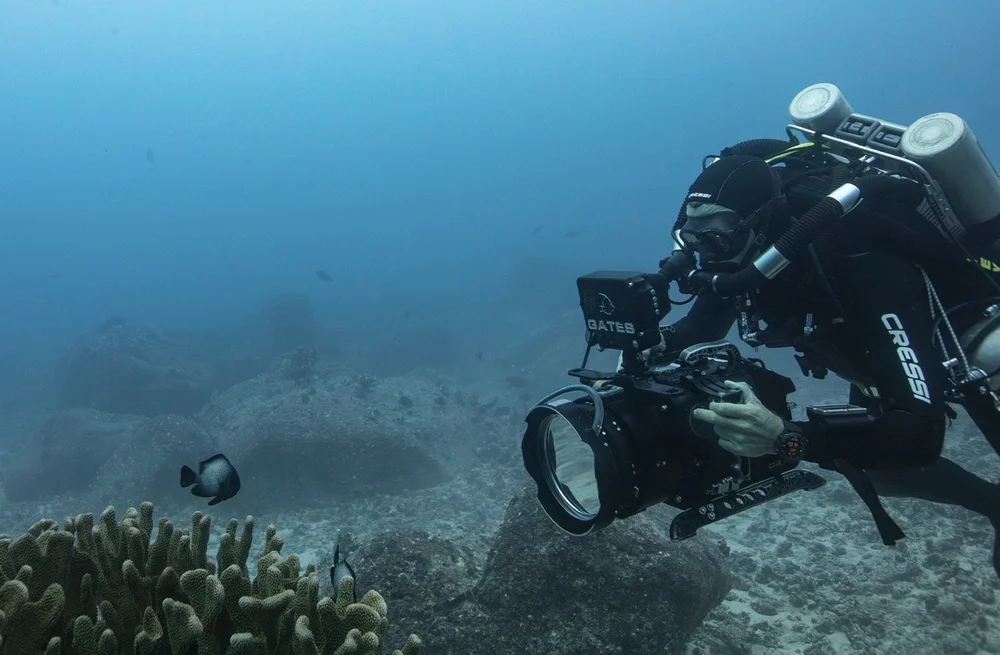
Today I shoot underwater for natural history film and television, including several National Geographic productions. Most of my time is spent offshore finding stories and building my own footage library. I work with a RED DSMC2 Gemini in a Gates Deep Weapon housing, freediving, on open-circuit scuba or closed-circuit rebreather, depending on what the animal needs. I'm happiest working alongside people who care about these animals as much as I do. I'm based in Kona and available to travel, so if you're working on something in Hawaiʻi, or in any ocean, I'd love to hear about it.
Credits
Working on something in the ocean?
Based in Kona, Hawaiʻi. Available for productions, stock requests and field support.